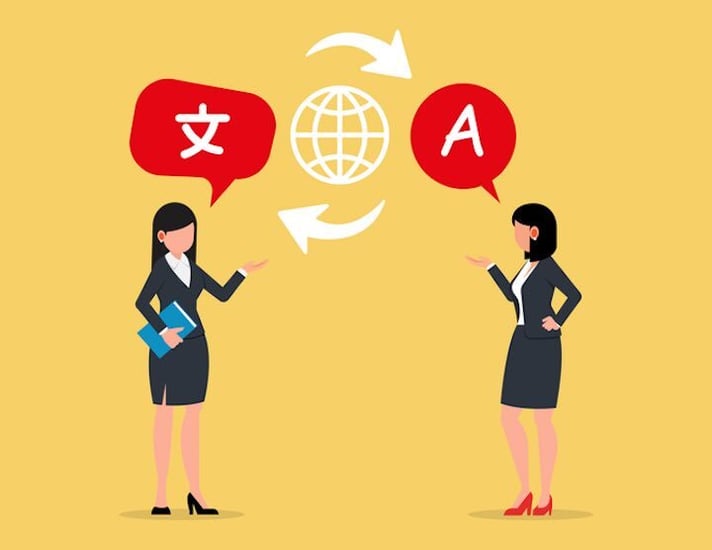
Government agencies serve everyone, which means your audience can include people from dozens or even hundreds of language communities.
Nearly 22 percent of U.S. residents age five and older speak a language other than English at home, according to reporting by the Associated Press based on Census Bureau figures.
As a Language Service Provider (LSP), we see that diversity as a strength, but we know it can make your communication planning complicated. The most widely spoken languages can differ dramatically between neighboring counties.
Less common languages cannot simply be ignored, especially when someone is trying to understand healthcare information, immigration paperwork, housing assistance, or their legal rights.
Your translation priorities need to reflect the people you actually serve. That means looking at current community data, monitoring demographic changes, and understanding which government documents need expert translation.
Accuracy Has Real Consequences
An awkward sentence in a tourism brochure might be embarrassing. An unclear sentence in a benefits notice, emergency warning, or consent form can affect someone’s safety, finances, or ability to access a public service.
Government content often includes legal language, policy terminology, abbreviations, and references that make sense inside your agency but may confuse the general public.
Translators need to understand the subject as well as the language. They also need context about the document’s purpose, audience, and required response.
We recommend using specialist linguists, approved glossaries, and independent reviews for high-stakes materials. These are central requirements for accurate government document translation, not unnecessary extras slowing down the process.
Compliance and Security Come With the Territory
Your agency may need to follow language access rules, accessibility standards, procurement requirements, records policies, and strict confidentiality procedures. Those responsibilities continue after a document leaves your internal team.
Citizen records, legal files, healthcare information, and internal reports should only move through secure systems with controlled access. You need to know who can view the content, where it is stored, and whether approved files can be traced through every stage of production.
An LSP familiar with compliance and security in government translation can build these requirements into the workflow from the beginning. That makes audits and internal reviews much less painful later.
One Message Has to Work Across Many Formats
Government communication rarely lives in one tidy document. The same announcement might appear on your website, in a mailed letter, inside a PDF, across social channels, and in a video with captions or voice-over.
Every format introduces different challenges. Translated text can expand and disrupt a form. A website may not display right-to-left languages correctly. A technically accurate PDF may still be unusable with a screen reader.
Accessibility should be considered during planning, not added after translation is finished. Our guide to ADA-compliant translations explains why language access and accessible design need to work together.
Demand Can Change Without Warning
A public health event, severe weather emergency, policy change, or election can create a sudden need for large volumes of multilingual content. The information may need to go live within hours, while still meeting the same quality and security standards as a carefully scheduled project.
This pressure is one reason government is such an important part of the language-services market. Nimdzi’s industry research found that government was the leading vertical for interpreting services, with 55.7 percent of surveyed providers serving that area.
Your agency needs a process that can expand quickly without becoming chaotic. Dedicated government translation support gives you established contacts, clear escalation routes, and access to qualified linguists when demand suddenly jumps.
Culture Matters as Much as Vocabulary
A translation can be grammatically correct and still miss its audience. Tone, formality, examples, and even the way instructions are presented can change how a message is understood.
This matters when people already feel uncertain about dealing with an agency. Language that sounds unnecessarily cold, vague, or threatening may discourage them from asking for help or completing an important process.
We work with native-speaking linguists who understand how messages will land within the community, while preserving your original meaning and authority. That balance is at the heart of cultural sensitivity in government translations.
A Reliable Process Makes the Complexity Manageable
You do not have to solve every language challenge separately. With clear priorities, secure workflows, terminology resources, qualified reviewers, and a partner who understands public-sector communication, translation becomes far more predictable.
The goal is not simply to produce words in another language. It is to help people understand what your agency needs them to know and what they should do next.
An experienced government language service provider can help you build a practical system that protects accuracy, supports compliance, and keeps communication moving when the pressure is on.
Do you work for an agency that could use the support of an LSP with experience in the government sector?
If so, get in touch. Consultations are free and there’s no obligation.
You’re in safe hands with us as we’re ISO 17100 and ISO 9001 compliant, have over twenty years of professional translation experience, and have earned the trust of organizations around the world.