
If you’ve ever been asked to provide a certified translation of a document, you probably paused and thought, “Okay… what exactly does that mean?” It sounds official. Maybe even a little intimidating. But we promise, it’s much simpler than it sounds.
At LinguaLinx, as a Language Service Provider (LSP), this is something we walk our clients through all the time.
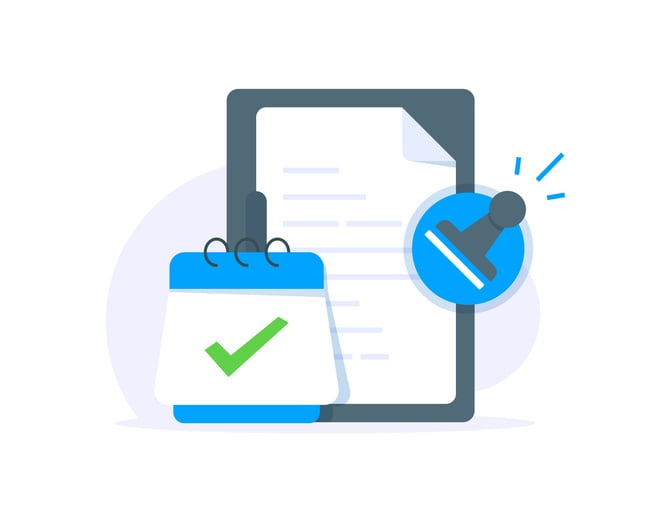
At its core, a certified translation is simply a translated document that comes with a signed statement from the translator (or LSP) saying that the translation is complete and accurate to the best of their knowledge.
That’s it. No secret code. No mysterious government stamp required in most cases.
But there are a few details that matter, and that’s where things can get confusing.
The Basic Idea Behind It
When an organization asks you for a certified translation, what they’re really asking is this: “Can someone qualified confirm that this translation is accurate?”
They want assurance that the English version (or whatever language you’re translating into) truly reflects the original document. They don’t want summaries. They don’t want paraphrasing. They want a word-for-word faithful rendering of the original content.
The “certified” part comes from the translator’s signed certification statement. This statement typically includes:
-
A declaration that the translator is competent in both languages.
-
A confirmation that the translation is accurate and complete.
-
The translator’s name, signature, date, and contact information.
That signed statement is what turns a regular translation into a certified translation.
What Makes It Different From a Regular Translation?
You might be wondering, “Isn’t all professional translation supposed to be accurate?”
Yes, ideally it is. But a regular translation doesn’t necessarily come with a formal signed certification statement.
If you hired someone to translate a restaurant menu or a website page, you probably wouldn’t need that extra paperwork.
Certified translations are usually required for official or legal purposes. That’s when the receiving organization wants written accountability from the translator.
So, the difference isn’t necessarily in how the translation is done. It’s in the documentation that comes with it.
When You Might Need One
Certified translations are most commonly required for official documents. Think about things like birth certificates, marriage certificates, divorce decrees, academic transcripts, diplomas, passports, or court documents.
If you’re applying for immigration benefits, enrolling in a university, getting married abroad, or dealing with a legal process in another country, there’s a good chance someone will ask you for a certified translation.
Basically, if the document is important enough that it affects your legal status, education, identity, or finances, you’ll probably need that certification statement attached.
Does It Have to Be Notarized?
This is where people often get tripped up.
A certified translation is not automatically the same thing as a notarized translation.
In most cases, certification only requires the translator’s signed statement. A notary is not required unless the requesting authority specifically asks for notarization.
Notarization simply means a notary public verifies the identity of the person signing the certification statement. The notary does not verify the accuracy of the translation itself. They’re only confirming that the signature is legitimate.
So unless the instructions clearly say “notarized translation,” you usually just need a certified one.
Who Can Provide a Certified Translation?
Another common question is whether the translator needs to be “licensed” or “officially approved.”
In the United States, there’s no single government license that someone must hold to provide a certified translation. The key requirement is that the translator must be competent in both languages and willing to sign the certification statement.
That said, you generally don’t want to ask a bilingual friend to do this for important documents. Most agencies and institutions expect a professional translator or LSP. It adds credibility and reduces the chance of rejection.
The person providing the certification is putting their professional reputation on the line by signing that statement. That’s why accuracy really matters.
What the Translation Looks Like
A certified translation should be a complete and faithful representation of the original document. That means everything gets translated, including stamps, seals, signatures, and handwritten notes.
If something can’t be translated directly, like an official seal, the translator will typically describe it in brackets. For example, you might see something like “[Official seal of the Ministry of Education].”
The formatting usually mirrors the original document as closely as possible so that it’s easy to compare the two.
And at the end, attached as a separate page or included below the translation, you’ll find the certification statement with the translator’s signature.
Why Accuracy Is So Important
When you submit a certified translation, the receiving authority often cannot read the original language. They’re relying entirely on the English version (or whichever language you’ve translated into).
If there are errors, missing information, or inconsistencies, it could delay your application or even cause it to be rejected.
That’s why certified translations aren’t just about language skills. They’re about precision. Dates, names, identification numbers, and official terminology all need to be exactly right.
It’s less about sounding beautiful and more about being exact.
It’s as Simple as That
If you’re being asked for a certified translation, don’t panic. It’s not as complicated as it sounds.
You simply need a complete and accurate translation of your document, along with a signed statement from the translator confirming that it’s accurate and that they’re qualified to do the work.
That’s all a certified translation really is.
It’s about trust, accountability, and making sure everyone involved can rely on the document in front of them. Once you understand that, the whole concept feels a lot less intimidating.
And now, if someone asks you for one, you’ll know exactly what they mean.
Does your business often deal with translated documents that need certification? If so, we’d love to talk to you. Consultations are free and there’s no obligation.
You’re in safe hands with us as we’re ISO 17100 and ISO 9001 compliant, have over twenty years of professional translation experience, and have earned the trust of organizations around the world.